Empress Zita and the Catholic Life: 5 Lessons for Modern Catholics from a Forgotten Empress
Discover five powerful lessons for Catholics today from Zita’s life as wife, mother, and servant of God.
The last Catholic empire crumbled under Zita’s feet, her husband died an untimely death in exile, and she raised eight children on her own. She wore only black for over 60 years for she had much to mourn in this valley of tears, but she did not lose the joy of her Catholic faith.
Who was Zita? She was the wife of the last Emperor of Austria, Blessed Charles. She herself was of royal birth and her family had already experienced the pains of modernity against monarchy.
It is perhaps precisely because she felt so heavily the tides of change that she found strong devotion in the unchanging. The Church has declared her a Servant of God, which means her cause is open for canonization.
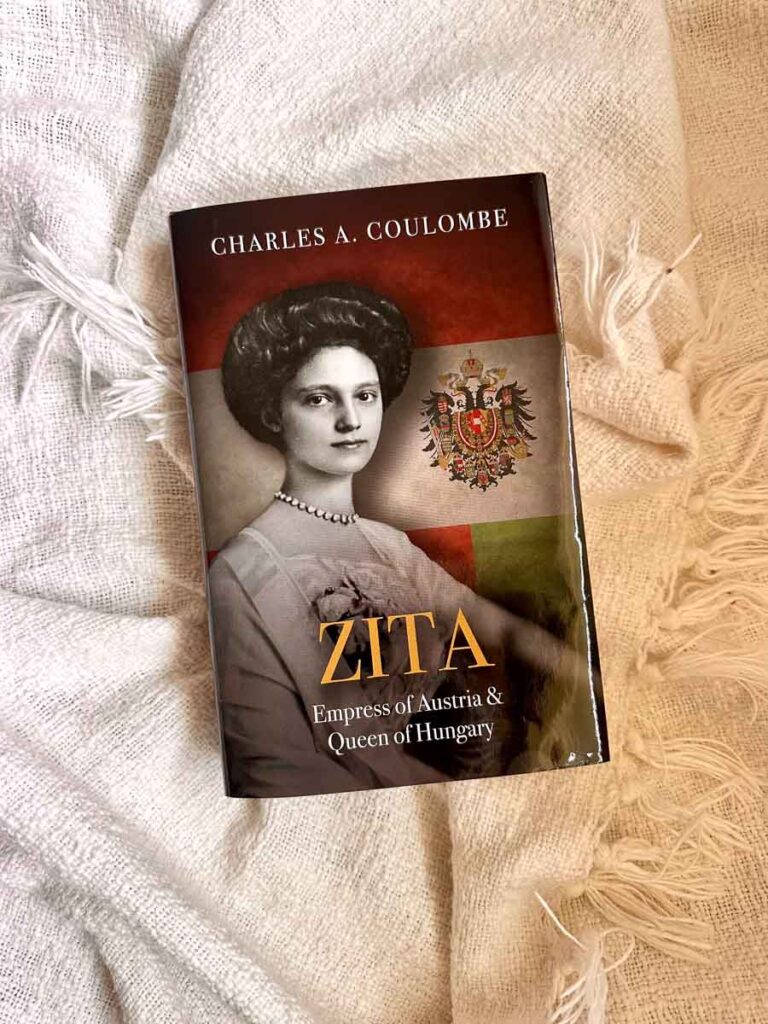
Now I don’t know much about palaces or royal titles, but I did just read Charles Coulombe’s new biography, Zita: Empress of Austria & Queen of Hungary and was struck by how much we can learn from her under her “simple” titles of wife and mother.
She shows us how to persevere in trials, love our husbands with unwavering devotion, raise our children in the faith, and trust in the Sacred Heart. Here are 5 lessons for us non-royals today from a forgotten empress:
Persevere with charity and grace in times of Crisis
Zita’s unwavering trust in God sustained her through war, exile, and personal loss.
Zita lived through the most tumultuous timeline in modern history. She was not only a witness, but a direct victim of great upheaval. She lived through a technological revolution, World War I, World War II, the rise of communism, and drastic changes within the Church.
And yet, she carried on with a remarkable sense of duty toward others.
To look at just World War I—it was a heartbreaking disaster for her family. The conflict began with the assassination of her husband’s uncle, Archduke Franz Ferdinand, and his wife, who were both close mentors in faith and politics to Zita and Charles.
It would end in the loss of her own husband while in exile.
Zita and Charles’s glorious coronations were eclipsed by the bloodshed of their people during the war. With a heart for others, she would remind key men of the humanitarian concerns, as she wrote her brothers Sixtus and Xavier who were instrumental in failed negotiations for a peace deal:
“Think of all those unhappy people who are living in the inferno of the trenches, who are dying there by hundreds every day. Think of them and come.”[1]
She also had heart for the opposition. For example, when she learned that the Germans, her allies, were bombing the King and Queen of Belgium (on their name days, no less!) she went to Kaiser Wilhelm’s wife and urged her to put herself in the shoes of the enemy. Together the two empresses confronted the man in charge and the bombing stopped.[2]
Zita and Charles worked hard for a peace deal to end the suffering and keep their people united. Yet they were met by betrayal on all sides—including from the very bishop who had crowned Charles emperor and king!
Each time they fled further and further into exile, their plans centered around devotion to the Sacred Heart and Holy Mass. Zita did not fall into despair but at each crushing defeat would look to the next task ahead of her and pursue it with an iron will.
As we look at our own tumultuous times with the rise of AI, the threats of war, and the attacks on the church both inside and out, we can look to the defeats and personal losses of Zita. She reminds us not to despair but to look at the next task God has before us and to pursue it unwaveringly.
Embrace the Vocation of Marriage with Faithful love
Zita’s marriage to Blessed Charles was rooted in prayer, devotions, and sacrifice.
From the outset, Zita’s marriage to Charles was rooted in prayer and devotion. One of these devotions was to Our Lady. The inscription on their wedding rings read (in latin), “Under thy protection we seek refuge, O Holy Mother of God.”[3]
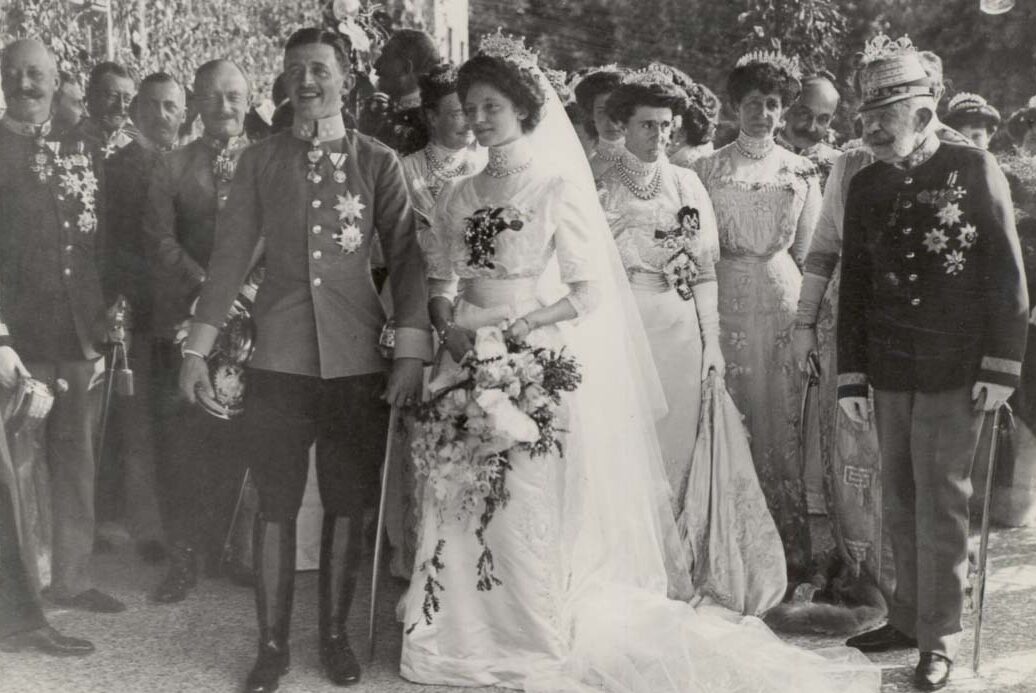
Their first stop on their honeymoon was at a shrine of Our Lady—Mariazell in Austria. There Charles vowed to his bride, “Now we must begin to help each other get to heaven.”[4]
As Coulombe describes, the couple was firmly united not just in their royal backgrounds and political stances, but most importantly in their spiritual life.
Zita stood by her husband’s side. She took seriously, as he did, the vows that they made to their people at their coronations. Famously, she exhorted him not to abdicate his throne:
“…but abdicate! Never, never, never! Rather will I be struck down here with you!”[5]
She remained good on her word and would risk her life traveling with Charles on his second attempt at restoration. Notably, they brought with them on this dangerous trip a statute of the Sacred Heart.[6]
It ended in failure and the couple was exiled even further—to the Portuguese island of Madeira. There Charles and one of their sons would become terribly ill with pneumonia. Zita worked tirelessly, sleeping on the floor between their rooms to nurse them back to health.
Tragically, Charles would not survive. He died in 1922 when Zita was only 29, and she would still go on to live a long life until her death in 1989. But, from that day forward, she dressed only in black and never married again.
None of us will ever face such extraordinary circumstances in our own marriages. Still, we have our own sufferings, our own losses, our own mini exiles. A spouse may take a job that parts us from loved ones or homeland. A spouse may struggle with illness, cancer, and even death. We have our own battles as we navigate the assaults against marriage in our modern times.
Let us place our marriages under the mantle of Our Lady, and take the Sacred Heart with us wherever we go. May Charles and Zita’s unbreakable bond rooted in their faith inspire our own marriages.
Embrace the duties of motherhood and be generous with life
Zita’s example as a mother shows how Catholic families can educate children in virtue, even amid suffering and exile.
At Charles’s death Zita found herself alone in exile, a single mother with 7 children. Moreover, she was pregnant with the eighth.
Throughout their marriage, both in war and in exile, the couple embraced the gift of life. They faced uncertainty regarding their own safety and welfare. At times they had no money. Yet they welcomed life as a precious consolation—joy amid sorrow.
Zita herself had come from a large family. She was 1 of 24 children! Her father had had twelve children with his first wife who died tragically in childbirth with the last. He had twelve more with Zita’s mother.
Alone without Charles and with very little money, she moved her children around Europe and North America to keep them safe and give them the very best education that she could. She was determined to raise her children as fitting to their royal titles, especially her eldest son Otto.
As a homeschool mother myself, I admire the regimen that Zita set out for her children. Otto later recounts starting school at 6 AM and studying by himself in the evenings.
Zita made sure that he learned the various languages of his people and sought out the best tutors. When her children got older, she did all she could to ensure that they received their college education from a Catholic university.
Despite Zita’s best efforts, Otto never would retake the throne, but he and his siblings were well prepared for their changing landscapes. They married well and took jobs in business, philanthropy, and, in Otto’s case, politics.
While you probably do not have plans for your son to be emperor, you probably do have some hopes and dreams for your children—and they might not be realized. Zita can inspire us to shoot for the best, to seek an education in the Catholic faith and virtue, even when not everything is going to plan.
From there we can trust our children to God’s Providence in an ever-changing landscape of our modern world.
Live a Spirit of Poverty with Dignity and Trust in God
From palace to poverty, Zita made the best of her suffering and even helped others in need.
After Charles’ death, Zita had little to no money until her children were old enough to provide for her in turn. The Austrian government had seized some of their assets and other assets had been stolen from them by people they had once trusted.
Yet Zita made do. She survived by the generosity of family and loyal followers, especially for housing. She was also resourceful; she would make salads with dandelions, and she would not shy away from royal dignity even in her poverty.
She once invited Princess Alice, the granddaughter of Queen Victoria, to her home in Canada. She served tea to the princess while she herself only drank water. The Princess would later recount how Zita wore the same black dress without “any bit of jewelry.” Princess Alice adds, “I thought they seemed very poor.”[7]
Yet there Zita was, offering her hospitality as empress and making up for what she lacked in material goods with good conversation.
Despite her poverty in exile, she would continue to stay informed of the plight of her people and in touch with her former subjects in exile. She would meet Ven. Fulton Sheen this way, as he gave a homily for the ordination of a Bishop of the Urkrainian Greek Catholic Exarchate.
As Coulombe describes, she would also receive letters asking for help from former subjects to which she would offer prayer and moral support—the most famous of these being the von Trapp family.
After the second world war she successfully advocated for her Austria to receive aid from the United States and she would personally devote herself to collecting donations for her war-trodden people.
We can find solidarity with Zita in our own poverty and learn to make do with what we have. She sets an example to offer our own humble hospitality to those more fortunate than us and charity to those less fortunate.
Stay Rooted in Devotion to the Sacred Heart and the Holy Mass
Zita’s spiritual life was anchored in the Eucharist and a deep love for the Sacred Heart of Jesus.
Zita’s life was rooted in devotion to the Sacred Heart of Jesus. As I already mentioned before, the family traveled with a statue of the Sacred Heart as they were sent about in exile.
When the family was first sent into exile, Charles looked at the 700-year-old Empire crumbling beneath him. His family had already spent months of hardship outside of Vienna having to fend off assassins and hunt for their own food. Not knowing if he’d ever see his homeland again, Charles got in the car to leave saying, “Sacred Heart of Jesus, I trust in you!”[8]
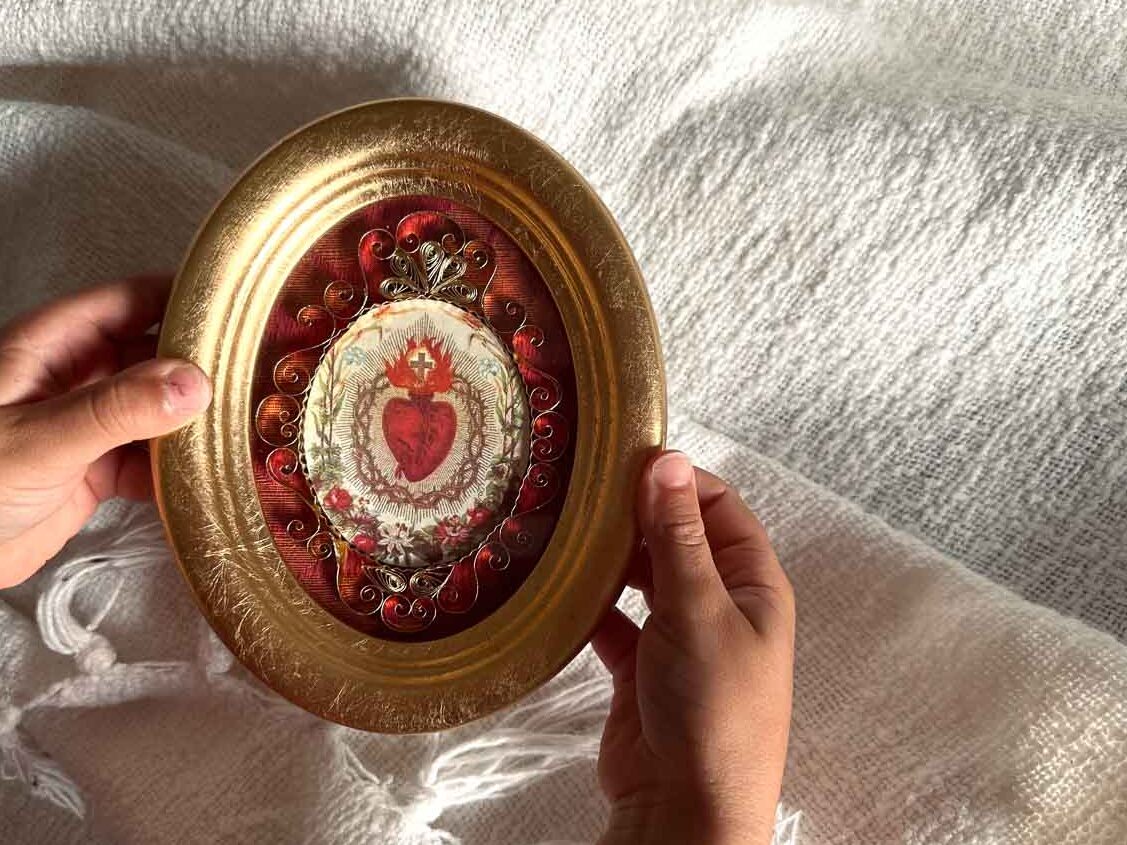
Images of the Sacred Heart were placed in the family chapel and in the children’s bedrooms. They would be given as Christmas gifts as well. The family held Friday devotions to the Sacred Heart as well. They found solace in Christ’s humanity as represented in the heart that so burns with love for us.
Zita was also devoted to the Eucharist. One thing that struck me in reading Coulombe’s book was how much her fleeing and travels centered on first visiting the family chapel for Holy Mass.
And of course, the importance of having a family chapel wherever she went is something to admire and long for. No doubt this was the privilege of a Catholic monarch to be able to keep a tabernacle in her own home and priests ready and willing to say Masses for the family.
We can be inspired to enthrone an image to the Sacred Heart in our own homes. When navigating difficult times or charting off into the unknown, we can take from Charles and Zita’s example and turn our minds to trust in the Sacred Heart.
We might not have the privilege of a home chapel complete with a tabernacle, but we can be inspired to have a prominent place of prayer in the home and to seek Holy Mass whenever we can.
Empress Zita may represent a time forgotten, but she is remembered by the Church. Her example still speaks to Catholics today in her perseverance through exile, her embrace of marriage and motherhood, her acceptance of poverty, and her devotion to Our Lord.
As we navigate our own challenges, Zita shows us that holiness is not confined to convents or marked with worldly triumph. It can be lived in our ordinary duties in all states of life—whether in the palace or in poverty. We can look to Empress Zita not merely as a historical figure, but as a servant of God and a model of Catholic faith.
Want to learn more?
Read more about Zita’s life in Zita: Empress of Austria and Queen of Hungary by Charles A. Coulombe. You can also read about her husband, Bl. Charles in Blessed Charles of Austria: A Holy Emperor and His Legacy by the same author.
Pray for her cause for canonization and ask for her intercession—especially for families, mothers, and those suffering in poverty or war. May Zita and Charles soon be counted among the saints.
[1] Coulombe, Charles A. ZITA: Empress of Austria and Queen of Hungary, 154.
[2] 160-61
[3] 84
[4] 84
[5] 203
[6] 256
[7] 329
[8] 224